Keep Calm and Reduce Stress (10 Tips)

The Christmas holidays can be a stressful time of the year with family responsibilities, deadlines at work, and unspoken expectations. But it doesn’t have to be stressful and we don’t have to be stressed. At every moment of everyday we have a choice – if you find yourself getting stressed either say no or delegate the task. Monitor and acknowledge your stress, and practice these 10 tips to keep calm during the hustle and bustle of this holiday season.

©2014 Susie Lee

/home/wpcom/public_html/wp-content/blogs.dir/f1b/25908393/files/2014/12/img_1436.jpg

27 Ways to Get More Sh!t Done

I admit there are a lot of things I use to do more of: I use to write in my journal daily, write weekly articles, play my guitar, practice my singing, read books, garden, bake, and have time to create crafty things. I’m not sure if it’s because I don’t have time for them anymore, or if it’s because I’m distracted by social media, or if I’m just being down right lazy. Either way, there’s no doubt that we were designed to create, discover, and reach our full potential. But this won’t magically happen by wishing, hoping, and dreaming – it takes work, discipline, focus, and sacrifice. Here are some simple tips on how to streamline our time, discipline ourselves, and reduce the distractions around us.

©2014 Susie Lee

system

27 Ways to Get More Sh!t Done

1. Get enough sleep. Whoever coined the phrase “I’ll sleep when I’m dead” didn’t have all the facts straight. Not getting enough Zzz’s could hinder productivity at work, so try to get those recommended seven to nine hours of snooze time!

2. Create routines. Make a habit of, well, sticking to habits. Schedule actions like writing emails at a certain time or hitting the gym after work, and try to do them daily. Soon that routine will happen on autopilot.

3. Wake up earlier. As long as you’re still able to squeeze in enough sleep, try extending the day by getting up an hour earlier—when it’s still quiet and there are fewer distractions.

4. Step away from the inbox. Incoming emails can be a nuisance. Make a habit to only check the inbox at certain times of the day to avoid getting sidetracked with requests and responses.

5. Make a daily to-do list. Stay away from huge to-do lists. Instead, create a daily list of realistic jobs to tackle, like folding laundry, scheduling a doctor’s appointment, or paying the cable bill. Break up big goals into micro-tasks, like going to a yoga class over getting six-pack abs, or writing a page over completing a thesis. Soon, the small things will add up to big accomplishments.

6. Take a midday workout break. Got writers’ block? Can’t fathom cleaning the bathroom? Try hitting the pavement. Working out during the day could actually boost productivity, so the time spent exercising could actually help us get more done later.

7. Don’t multitask. Our brains aren’t wired to juggle too much at once, and we can work nearly twice as fast if we do only one thing at a time. (And nope, we’re not talking LOST time-travel). So remember those childhood manners and finish tasks one at a time.

8. Silence the phone. When it comes to getting stuff done, sometimes silence is key. Turn off email alerts and the cell phone ringer—that’s what voicemail is for!

9. Make a to-don’t list. Bad habits are just as significant as good ones. So make a list of things not to do because they make you unproductive (we’re staring at you, Netflix), and stick to it.

10. Brainstorm. Take some time to sit and get those creative juices flowing. Without distractions, brainstorming may be the way to come up with killer ideas in record time. Bonus: Creativity can make you happier.

11. Do those MITs. Nope, this isn’t college talk. MIT stands for Most Important Tasks, and it’s a way to highlight the items that matter most on that to-do list. At the start of each day, write down a few things that must get done. Commit to tackling those tasks, and let the rest of the chips fall where they may.

12. Hit inbox zero. Sort every email once that inbox is open. Respond, file, draft, or delete. Keeping the inbox clean is key to staying organized and on point. (Just remember not to keep the inbox open when you aren’t organizing it).

13. Stay healthy. Just like… don’t get sick. (It may be easier said than done). But health and productivity go hand in hand, so be sure to maintain good health habits, like eating well and washing up after hitting the gym!

14. Keep a pen and pad on hand. Make like Richard Branson and carry pen and paper (or your smartphone) to catch any useful thought that may come to mind. Up the creativity ante and make your own moleskin DIY style.

15. Shut off social media. Sayonara, Facebook, Twitter, and Pinterest. Social media can be a huge time suck. Studies have found that it can take up a significant chunk of time at the office, and may even predict lower grades in school. Make it a habit to unplug whenever you need to get something done.

16. “Eat the frogs.” We swear it’s a real term. Each day, once you’ve figured out your Most Important Tasks, do the task you’re least looking forward to first. That way, you’ll get it out of the way early and feel super productive, to boot. (No guarantees Prince Charming will emerge).

17. Slow down. Read. This. Slowly. Getting stuff done isn’t always a matter of making it to the finish line first. Take time to reflect, brainstorm, and recharge. The added energy will make you that much more productive when you put your nose back to the grindstone.

18. Track time. Take a day to record how much time is spent writing emails, reading blogs, texting, etc. You may be surprised at how much time certain activities (ahem, browsing Pinterest) take up every day. Once you’ve figured out how your time is being used up, make it a point to prioritize what really matters to you (and cut out what doesn’t).

19. Don’t bounce around. Box off a specific amount of time for every task on your to-do list each day. Assign a chunk of the day for one project, and stay focused on that project during its designated time. Once that time is up, move on to the next mission.

20. Tune out. Those headphones will help tune out any distractions. Plus, coworkers and friends may be less likely to interrupt if they see we’re tuned in.

21. Look back. Schedule some time toward the end of each week to reflect on what you accomplished and make any necessary schedule tweaks for the following week.

22. Set triggers. Leave reminders around your workspace and home to help you remember what needs to get done. Place bills that need to be paid or books to be read out in the open, and stick post-it reminders on the fridge!

23. Eat well. What we scarf down for lunch may do more than satisfy hunger. Certain foods, like salmon, almonds, and carrots, can give us a much-needed boost of energy. So forgo the take-out and be picky at the cafeteria!

24. De-clutter. Get rid of anything that may cause distractions. Put away the dishes, fold clothes, and get rid of excess papers on the desk so you’re less likely to get sidetracked. Up the ante by implementing some Feng Shui principles in your workspace.

25. Say no. Don’t stretch yourself too thin. Learning to say no—to going out for drinks when you’re tired, to extra projects when you’re swamped—keeps us focused, prevents overwhelm, and may even ward off sickness.

26. Take a break. Carve out some quality “you” time each day to keep a balance between the busy world and your own inner life.

27. Download help. Still need to get sh!t done? Luckily there’s an app for that.

Written by Laura Schwecherl

7-Day Smartphone Detox

I admit having a smart phone is convenient to have and to hold. It captures, receives, sends, entertains, and informs within seconds. It fits in the palm of our hands and nestles in the pockets of our clothes. But I also know how addictive it can be. I challenge us to take this 7-day smartphone detox in order to be more present to life. Overtime, our handheld gadgets will no longer grip our hearts or consume our undivided attention. May this detox help us to be present to those around us and open to the beauty that surrounds us everyday!

©2014 Susie Lee

detox

Happiness is an Inside Job.

Happiness is something most people want in life. Many have tried to find it in relationships or tried to buy it in stores. Unfortunately, true lasting happiness can’t be purchased or earned but rather it’s an attitude we create and carry within us. It starts by approaching life with gratitude and appreciating the beauty around us. Our thoughts and attitude will determine the level of our happiness. No matter where you’re at in life, I encourage you to take this 30-Day No Fail Happiness Challenge! If you do, I’d love to hear how it’s going!

©2014 Susie Lee

30 day 2

How to stay motivated.

There are going to be days when we’ve lost our zest for life or lack the motivation to fulfill our goals. It’ll happen to all of us at some point in our lives whether it’s in our homes, work, school, and yes, even in our play. Here are a few helpful tips on how to stay motivated during those times we feel tired and unenthusiastic. Most importantly, we need to rest along the way, take care of ourselves, and enjoy the simple things in life.

©2014 Susie Lee

How to stay motivated

Living our lives by this definition:

Now, tomorrow, and forever…
Definition of life

55 gentle ways to take care of yourself.

55

Perhaps this winter has taken a toll on your mental state and you can’t wait for spring to arrive or you feel the weight of family responsibilities are crushing your shoulders or the people around you are vying for your attention/affection. Wherever you are, whatever you’re doing or however you’re feeling, here are 55 simple ways to take care of yourself on a daily basis. Sometimes, we need to crash and burn before we realize that we need to take care of our bodies, give permission to be good to ourselves, and love ourselves but why wait until then? Let’s take proactive steps toward self-love everyday of our lives.

©2014 Susie Lee

Say no to anything that is not important to you
Laundry, phone calls with your mom, demanding girlfriends – this is not the time to be nice and “responsible”. Give yourself the permission to focus on what’s important. Getting the unessential responsibilites off your schedule will not only create som extra time and space, it will also lighten the burden you’re feeling to keep up with it.

Ask for help
There’s nothing wrong with asking for help, and you’ll quickly learn that most people around you actually love to be asked! It makes them feel useful and important. What usually helps the most is to get help to do the normal things; cooking, shopping and regular every-day tasks. However, don’t underestimate how important the people in your life can be when it comes to feedback, motivation and supporting your self-confidence regarding the important work you’re doing.

Get enough sleep
An oldie, but a goodie. This old advice is not only essential when it comes to self-care, it is also absolutely essential when it comes to being able to do your best. Particularly important when it comes to exam periods and work stress, sleep will help you achieve. It’s easy to think that a few extra hours of work will do you more good, but it won’t. Sleep will.

Drink tea
Coffee will only get you that far, before it sends you down into tiredness again. While still being hot and comforting, tea (and especially the herbal kind) won’t make you dehydrated and shaky. If you’re feeling tired and think you need a coffeine boost, go for cold water (or iced tea) instead. Cold water will help wake you up!

Listen to your favourite music
Calm music will help you calm down and upbeat music will help you up your game. Pick music that won’t distract you (like music without lyrics or in a foreign language). Your favourite music will boost your mood and keep you happy, no matter how tired you are.

Eat healthy and green food
I know it’s tempting to order pizza, but it really pays off to take your time to cook and eat nutritious and healthy food. Not only will it help you achieve better, it will also boost your mood! I truly recommend heading over to The Stonesoup for some quick and easy recipes. Most of these recipes can be made in less than 10 minutes!

Take 5 minutes in the morning to just stretch and breathe
If you start your day in a stressful way, you’ll probably feel stressed for the rest of the day as well. Make sure your morning starts with 5 minutes of silence and ease. Stand up and stretch your body to make you as tall as you can be. Then bend over and touch the ground. Stretch again. Try to just feel your body and pay attention to your breath. Starting the day in a way like this will make you more relaxed as well!

Walk everywhere
You might be busy and think that every minute is valuable time to put into your work, but some extra minutes of walking might be a better way to spend some time. If you live close to where you’re going, it’s better to walk than to use public transport (or your car). Not only will the exercise be good for you, you also get some important fresh air and daylight. If you have to commute, get off public transport one or two stops too early, or park your car further away than usual. The extra minutes of fresh air will save you lots of time when you start working and feel more focused.

Take 5-minute mini-breaks every hour
You can’t stay focused all the time. No matter how efficient you work, you’ll always get distracted, let your mind wander or end up spending time reading e-mail (and blogs) instead. A better way to spend this time is to get up from your chair, walk outside and take a 5-minute break. The change of place, the change of physical posture and the movement will make it easier to start again when your break is over. You’ll also give your brain a chance to relax and process information, which is essential for your well-being.

Break your self-care habits into smaller tasks and do one each day
No need to look like you’re constantly running after your life, even if you are! Just break up your routine into smaller, and more achievable chunchs. Shave your legs one day, paint your nails the next day, wash your hair the day after, etc. This approach also works with keeping your house tidy – just do one little chore every day and you’ll stay on top of everything more easily.

Make a plan of everything that needs to be done
Instead of juggling all your to-do’s and must-remember’s, write them down on a piece of paper. Then make a plan of how you are going to manage everything before your deadline. You may have to schedule a lot of tasks on certain days, and it may seem like too much to do, but at least you’ll know that everything will get done. Make sure you stick to the plan, every single day. Don’t fall for the temptation to start on tomorrow’s tasks today, trust that the plan will take you there, and enjoy some free time on the days when you finish your tasks early.

Make sure you keep in touch with your friends
Just a few text messages, tweets or the occational coffee will make sure your friendships don’t suffer. You will feel much better when you focus on something else entirely, and it will prevent you form becoming a workaholic hermit. You don’t have to keep in touch with everybody, most people will understand that you’re having a busy period. Just make sure you stay in touch with the people that make you happy and inspired.

Make room for rest
This one’s important. Make sure that whenever you plan to rest – really rest. That means that you will have to make a conscious effort to push all work-related thoughts and worries away. It’s also important that you rest your mind as well as your body. 5 minutes of stillness is better than 30 minutes in front of the TV!

Surround yourself with inspiring photos
Put up some of your favourite photos where you can see them when you work. Whenever you get unfocused, you will feel much better if you can rest your eyes on something pretty, rather than everything that reminds you of how busy you are. If you can’t put up photos at work or in a study hall, bring a scrapbook or use Pinterest on your computer.

Write a daily gratitude list
A daily gratitude list is really helpful to shift your focus and help you appreciate the situation. It doesn’t have to be long, a few sentences will do. If you keep a gratitude journal, you can also look back on your previous entries whenever you need a little boost of happiness and motivation.

Spend your lunchtime as sacred you-time
… and enjoy your healthy food with a little journaling, blog-reading, or people-watching. See it as a way to nourish your soul on several levels. It’s important to eat, but it’s equally important to be inspired, creative, silly, whimsical and happy.

Write a worry-list
Stress makes us more vulnerable, and worry can be a nasty side-effect of a busy period. If you find yourself worrying a lot, it’s a good idea to write a daily worry-list. Whenever you catch a worrying thought, write it down and save it for later. Spend 5 minutes in the morning and 5-minutes in the evening worrying about whatever you put on your list. It may sound simple, but postponing your worry will actually make it less worrying whenever you sit down and actually think about it in peace and quiet.

Take a run or a long walk
This one is pretty self-explanatory. Any sort of excercise will release endorophins, your body will thank you + it clears your head so you can focus on all the important work that lies ahead.

Keep a planner and schedule no-appointments time
To make your life less chaotic, it’s a good practice to keep a planner. Make sure you write down every single appointment, to save yourself from unwanted surprises and missed meetings. Just remember to schedule time for yourself. Honor your appointment with yourself just as much as you would keep an appointment with anyone else. Just make sure you schedule time with yourself first – anyone else needs to come in second in your life.

Keep track of your achievements
It may seem like you’re never going to get over a busy period, which is why you should keep a list of achievements close at any time.Whenever you hit a milestone – write it down! It will be very useful when you’re feeling tired by the end of the day and know that you still have several more hours of work before you can call it a day.

Wear your pretty clothes
… and be busy with style! If you dress nicely, chances are you’ll feel better too. All it takes is 5 minutes in the morning, and with your most powerful, wonderful and pretty clothes on, you’ll feel like a million for the rest of the day.

Go to a yoga class
…Or do some yoga at home. Even ten minutes of savasana is better than nothing, and will recharge your batteries (and your mind).

Take a hot bath
Nothing helps you relax like a hot bath. Use your favourite bubbles, turn off the light, light some candles and you’re good to go. One hour in the bath in the evening may be the best way to relax because of this simple fact – you can’t take your work and your computer with you.

Light candles
Candles have a relaxing effect, especially gently scented ones. If you can’t light candles in your workplace, make sure you light them when you get home. Lavender and cedarwood are scents that can help you relax.

Write support-thoughts and affirmations
Support-thoughts are thougths written down when you’re calm, that can support you when you are really busy and tired. For example, a gentle reminder of why you’re doing all the work, a short pep-talk, or a reminder of how wonderful you are is an amaxing way of taking care of yourself.

Craft an emotional emergency plan
Ideally, you should have this written down before you enter a really busy period. If everything goes wrong, and you’re maxed out, panicky or just plain exhausted – who do you call? what do you do? where do you go? Planning this in advance is self-care on a high level.

Breathe
Do I need to say more? When stress builds up, take five seconds off and just breathe. Deep.

Do something silly
Don’t forget to have fun! Who said you can’t laugh, even though you’re busy! Make jokes, engage with you co-workers, read comics and just allow yourself to be silly for a little while. I promise it wil boost your mood, your co-workers’ moods and a little laughter every day will help you through a really challenging time.

Single-task
Now is not the time to play superwoman. Be nice to yourself and let your brain tackle one task at a time. Rumours have it that this is more productive in the long run…

Read Focus by Leo Babauta
This book is quick to read (and there’s a free version!) and it will change your work habits and make it much easier to be you. Enough said.

Take the last evening off
The last night before your big D(r)eadline is the night to relax. Panicking in the last minute isn’t a very good way of taking care of yourself. And you don’t want to oversleep on your exam day, have dark circles under your eyes on presentation day or distroy everything in the last minute because you spent the last night cramming. Take the last evening (or even the last day) off and relax. You’ve done your best, there’s nothing more you can do. Pat yourself on your back – you made it.

Keep a tidy workspace
It will make you more focused, relaxed and less overwhelmed.

Create some routines
When work or studies take all your focus, it can be useful to create some new habits or routines to take some of the burden off your back. Make it a habit to cook a larger batch of dinner on day 1, and eat leftovers for the next two days. Use Sundays to prepare what to wear for the next couple of days. Wear your hair in a ponytail five days in a row. This is not the time to expect yourself to find lots of different and exciting outfits, hairdo’s or recipes.

Write things down
When you’re mind is working over-time, let it relax by helping yourself remember everything. Write down any ideas, to-do’s, must-remember’s and other things you have to remember. This way, you don’t have to carry the additional stress of remembering everything you need to remember.

Accept a little clutter and mess
Just let it be. Some dust and a little dirt has never hurt anyone. Focus on what’s important to you, you can always clean up the mess later. Just don’t go around and feel bad about it on top of everything else!

Allow your emotions to come to the surface
If you’re tired and sad, cry it all out. If you’re stressed, don’t try to put on a mask and hide it. Get it all out, all the frustration, the overwhelm, the anger and the fear. You’ll feel much better after.

Honour your limits
Set some limits and stick with them. A lot of tasks when we’re busy don’t have a set limit, like when you’re studying and being creative. It’s easy to feel like you’re never quite done. Set some clear limits for yourself and honor them. Say to yourself; “when the time is up, I’m DONE”.

Take the weekends completely off
If you’re under constant pressure over an extended period of time, it’s good practice to keep the weekends completely sacred. This means no work e-mail or calls, no appointments or catching up.

Gather your support group
Call your mother and ask her to help you take care of the house, tell your girlfriends what you’re dealing with, seek out others in the same situation as you, and make sure your partner is on your team. Not only can they help with practical tasks, they will give you lot’s of moral support and you’ll feel less alone.

Outsource
Outsource what you can, for example your home cleaning, laundry or bookeeping.

Delegate
If you’re working on a team – make sure you don’t try to do everything yourself, delegate as much as you can to lighten your load.

Get more sunlight
Especially if your busy period is happening in winter, make sure you get your daily dose of sunlight if you’re spending a lot of time in gloomy libraries and workplaces.

Take your vitamins
This won’t even take you a minute – just go for a multivitamin paired with your breakfast. Especially important if you’re eating a lot of processed and unhealthy foods when you’re busy, but remember that vitamins don’t make up for an unhealthy diet.

Eat fresh fruit and vegetables
Keep some fruits and nuts close by and snack when you’re hungry. Don’t forget the veg, cucumbers, cherry tomatoes and carrots are great snacks!

Use scented oils in the shower
Lavender to relax, or a little peppermint to wake you up – all you need is a drop or two of essential oil in the shower.

Resist the urge to be productive all the time
You can’t be equally productive every single waking moment, so you might as well schedule some off time right away. Be nice to yourself and don’t expect to accomplish as much in the late evening as you do in the morning.

Limit your media consumption
… because your brain can only process a limited amount of information. When you need your focus to be on work, don’t overflow your brain with tv news, newspapers, magazines and books.

Meditate in the morning
Ten minutes of stillness can make all the difference.

Block out distractions
Need to get some work done? Consider to pull out your internet cable, switch off your phone and lock the door. If only for a few hours, you won’t miss out on anything, and you’ll feel a lot better afterwards.

Compliment yourself
Positive self-speech can seriously impact your mood. Instead of adding to the monkey-brain thoughts of not good enough, too stressed and panic – tell yourself you look good, that you’re doing great and that you can manage everything that comes your way.

Do the dreaded tasks first
There are always tasks you’ll love to do more than others, and it’s tempting to do those first. However, it’s a good idea to do the hardest tasks first. That way, you’ll save yourself from all the dread!

Brighten your day with colourful pencils and pretty stationery
It doesn’t have to cost much, but it will make a huge impact on your happiness – especially if you’re a stationery and design geek… (well, who isn’t?)

Reward yourself
Maybe not the best overall habit to get used to, but desperate times call for desperate measures. If you need it to get through – reward yourself with gifts, chocolate and breaks whenever you finish a task. Just don’t make it a habit to kick yourself if you don’t make it. Maybe you need the treat anyways?

Postpone all major decisions
… This is not the time to move houses, quit your day job or break up with your spouse (however tempting any of those changes are). Save the big stuff for when you’re calmer and can think clearer.

Accept yourself as you are
Let yourself off the hook and accept that you are only human. You are doing your absolute best, and you are doing exactly what you need to do. Trust your instincts and keep doing whatever you’re doing. You don’t need to change anything about yourself – trust that you are perfect just the way you are.

Written by Marthe Hagen

11 simple ways to stay happy and healthy during the holidays

photo

This festive holiday season can, sometimes, be hectic and frantic with things to do, people to see, and commitments to fulfill. It’s in moments like these that we need serenity and solace within us. During this time, I encourage you to take a break, slow down your breathing, and be alone. Here are 11 simple and practical ways to be happy and calm as you move into the New Year:

1. Drink lots of water (and herbal tea).
2. Go to bed early and get plenty of sleep.
3. Eat healthy and well – start the day with a hearty breakfast, snack on fruits and veggies throughout the day, don’t skip meals, and avoid process foods.
4. Get outside and move your body.
5. Disconnect with your electronic gadgets and connect with people (or books).
6. Replace negative thoughts with positive thoughts. Replace fear with courage.
7. Don’t dwell on the past but be proactive in moving forward.
8. Instead of procrastinating, complete the hardest tasks at the top of your day.
9. Wear clothes that make you feel good. Listen to music that moves you.
10. Enjoy your own company – meditate, write, dance, paint, or play an instrument.
11. Play. Laugh. Love. Discover.

I wish you a wondrous Christmas! May peace and joy be yours in abundance!

©2013 Susie Lee

Discern the Balance

No to yourself

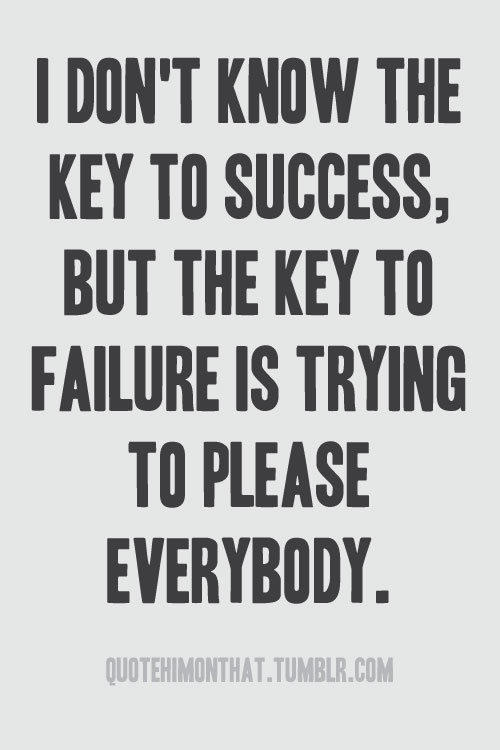
Key to Failure

8 Ways to Be a Happier Mom

I read this article and thought these 8 steps can apply to anyone not just moms (with a few modifications to #4 and #6). I especially identified with #1, 5, 7, and 8: #1 is a good reminder to be myself rather than to please people, #5 needs to be a part of my weekly routine as I love to work, #7 needs to de-clutter my sea of papers on my desk ASAP, and #8 is a good reminder that I need to graciously accept help from others.

These steps are simple, practical and can ground us in our hectic world we sometimes live in; juggling work, family, friends and health. And with the year being officially half over, I hope your New Year’s resolutions (or goals) are being fulfilled and you’re moving towards your personal best in all areas of life.

Here’s to a happier you!
–Susie Lee

8 Ways to Be a Happier Mom

While our greatest hope is for our children to turn into happy adults, most of us moms grit our teeth a fair amount on the road there. After we hustle our kids off to soccer practice, shop for dinner and hunt down the perfect kindergarten, we are left with little inspiration to model the one thing we most wish for our children: happiness. It’s not that we don’t want to be happy. It’s more a question of how to fit it into our schedule. Read on for some practical tips from parenting experts on how to move “be happy” to the top of your to-do list.

1. Be Yourself
Much of our stress and irritation as parents comes from trying to live up to impossible standards. “Mothers universally feel that they ‘are never good enough,'” says Meg Meeker, MD, author of The 10 Habits of Happy Mothers: Reclaiming Our Passion, Purpose and Sanity. A lot of these feelings of inadequacy come from comparing ourselves with other moms and competing in ways both small (bringing an elaborate dish to the potluck) and large (pushing our kids to achieve on the playing field). “It’s tempting to look around us to see if we measure up with other moms,” says Meagan Francis, author of The Happiest Mom: 10 Secrets to Enjoying Motherhood, “but when we’re comparing our private lives to somebody else’s public game face, we’re not getting a very accurate picture.” Francis adds that the best way to be a happy mom-and a good mom-is to be yourself. “Don’t try to be anyone else’s version of what a good mother should be,” Francis says. “Be the best version of who you are, and your children will recognize that and learn from it.” Think about your own strengths and work them into your everyday life as a mom. Maybe sewing costumes isn’t your thing, but you love to bake. This Halloween, buy costumes even though all the other moms are making theirs, and instead bake a batch of cookies to munch on while you all get ready to go trick-or-treating. When you play up your strengths as a parent, you are bound to have more fun and be happier.

2. Pencil in Solitude
Routinely setting aside time to go for a walk, write in a journal or read a book is one simple way you can raise your daily happiness quotient. “Mothers contend with so much stimulation during the day that life becomes overwhelming. From kids crying and older children needing homework help to answering cell phones and replying to emails, mothers can feel as though their nervous system is becoming fried,” says Dr. Meeker. Solitude is a necessity for our mental health. “Solitude achieves two very important purposes,” Dr. Meeker explains. “First, it allows mothers to quiet the ‘noise’ in their lives so that they can refresh themselves and hear themselves think. It allows our nervous system to slow down and become quieter so that we can recharge mentally, physically and emotionally. Second, solitude gives us a reprieve from giving. No woman can sustain constant giving to other humans (even if they are children) without a break.” If you don’t have even a half-hour to yourself each day, it may be time to reassess your to-do list. For example, do the brownies for this year’s bake sale really need to be made from scratch? Probably not-and by opting for the easier method, you can carve out a little bit of time for yourself.

3. Practice “Slow Family Time”
Slowing down the rush of family life has been one of the keys to happiness for Tsh Oxenreider, creator of SimpleMom.net and author of Organized Simplicity. “For our family,” Oxenreider says, “we’ve defined slowing down as ‘moving together at a deliberate and unhurried pace.’ When we slow down, we’re able to choose how to spend the 24 hours in each day, and therefore find more meaning in our activities.” Oxenreider achieves this by planning activities around family life, not the other way around: “Each Sunday, my husband and I meet to talk about our upcoming week. It only takes 30 minutes, but that brief connection gives us a chance to look at our calendars and decide how many evenings we’ll schedule out of the house, how we can help each other with upcoming tasks and how to dictate our commitments, instead of letting our commitments dictate us.” For other families, “slow family time” might mean leaving unstructured time in your schedule or simply hanging out with your kids at home with no particular plans or goal in mind.

4. Put Your Girlfriends Back on the Schedule
One of the quickest routes to getting your smile back is picking up the phone and calling a friend. Remember how good it feels to catch up? So often we put our friends on the back burner when we become mothers, forgetting that friendships are an essential source of joy. “Friends act as a tremendous support, but they also contribute to a mother’s happiness by acting as a release valve,” Dr. Meeker says. “When frustration or other emotions run high in a mom, a woman friend can provide a safe place for her to vent. And a key to a mother’s sanity and happiness is having an outlet for intense emotions.” Feel like you don’t have time for friends? Try the multitasking approach: Exercise with a friend, invite another mother over while your kids play in the backyard, offer to drive a mom to the baby-and-me class or invite a single girlfriend over for Sunday dinner.

5. Create a Weekly No-Work Day
Once upon a time, Sunday was strictly a day off. No one went to work and most stores were closed. It was a day to recharge and spend time with family. But with the advent of email and flexible schedules, any day can now be a work day-and any time can be work time. By integrating a regular “No Work Day” into your family’s weekly routine, moms can create more time for family fun while decreasing household stress levels. To pull off a day without work, family members will need to join forces in preparation for the day, including agreeing upon guidelines such as no checking email or work phone calls. To ensure that it’s a day off for stay-at-home parents as well, plan to work together the day before to clean up the house and prepare heat-and-eat meals such as lasagna or chili. If a full day dedicated to not working seems like too much of a leap from your current hectic schedule, start off with just one evening: one night a week, have the family gather to relax and play games or watch a movie with cell phones and computers off. The kids might balk at first, but soon they too will see the benefit of a time designated exclusively to leisure.

6. Share Your Passion with Your Kids
Somewhere between the afterschool shuffle and the rush to make dinner, many of us have lost track of our own passions. We are so in the habit of standing on the sidelines of our children’s activities that we’ve forgotten to share our own hobbies and passions with them. However, when you share the activities you like and enjoy with your kids, you will most likely be laughing, smiling and showing what happiness looks like to the people you care about the most. Think about simple ways you can enjoy your passions with your kids. Are you a music lover? Break out your CDs or old LPs and play DJ. Love to paint? Sit down with your kids and make art with them. By doing what we enjoy, we model happiness and show our children who we are.

7. Conquer Clutter
“Clutter is one of my biggest cranky-mom triggers,” Francis says. And most moms would agree that a messy house is one of their primary obstacles in the pursuit of happiness. “Adopt a no-prisoners approach to clutter control,” she suggests. “Toss unneeded papers in the recycling bin daily, come up with a simple system for keeping track of pending bills and paperwork, and, most important, become ruthless about which papers you’re willing to keep in the first place.” Having a routine can also help contain clutter. Have every member of the house do the same thing when they come home for the day: Hang up their coats (be sure to have a row of child-height hooks near the foyer), put shoes in the closet and place backpacks, purses, briefcases, keys and lunchboxes in their designated spots.

8. Outsource It
“We can’t do it all,” Francis reminds us, “and just because something needs to be done doesn’t mean that you need to do it.” Acknowledging that we can’t all hire household help, Francis suggests using a more flexible definition of ‘outsourcing’ for getting the help we need. “When we all focus on what skills and talents we bring to the table-without any shame for the stuff we aren’t so great at-we can meet our kids’ needs without having to try to do everything ourselves,” Francis says. Assess each family member’s skill set and delegate duties based on ability. Have a teenager who’s good at math? Assign her to help your middle school-age son with his algebra homework. Is one of your kids great at organizing? Assign him to create order out of a pile of mismatched plastic food containers. “We’re all good at different things,” Francis explains. “And it makes a lot of sense to divvy up household and parenting tasks by interest, skill and available time.” Apply the same concept of teamwork to cleaning the house, too. Hold 10-minute tidy-up sessions: Gather your family, cue up the dance tunes and set the timer for 10 minutes. You’ll be surprised how much you can get done working together-and how much fun you’ll have doing it!

Article from WomansDay.com written by Theo Pauline Nestor